
Adaptive AI-Driven Formative Assessment in Early Childhood Education: A Systematic Review and Meta-Analysis on Cultivating Social-Emotional Learning and Early Moderation
##plugins.themes.bootstrap3.article.sidebar##
##plugins.themes.bootstrap3.article.main##
 Nurratri Kurnia Sari
 https://orcid.org/0009-0006-7991-0454
Muhlis Fajar Wicaksana
https://orcid.org/0000-0002-4440-2218
https://orcid.org/0009-0006-7991-0454
Muhlis Fajar Wicaksana
https://orcid.org/0000-0002-4440-2218
 Md. Anisur Rahman
https://orcid.org/0009-0007-1817-1501
Md. Anisur Rahman
https://orcid.org/0009-0007-1817-1501
Abstract
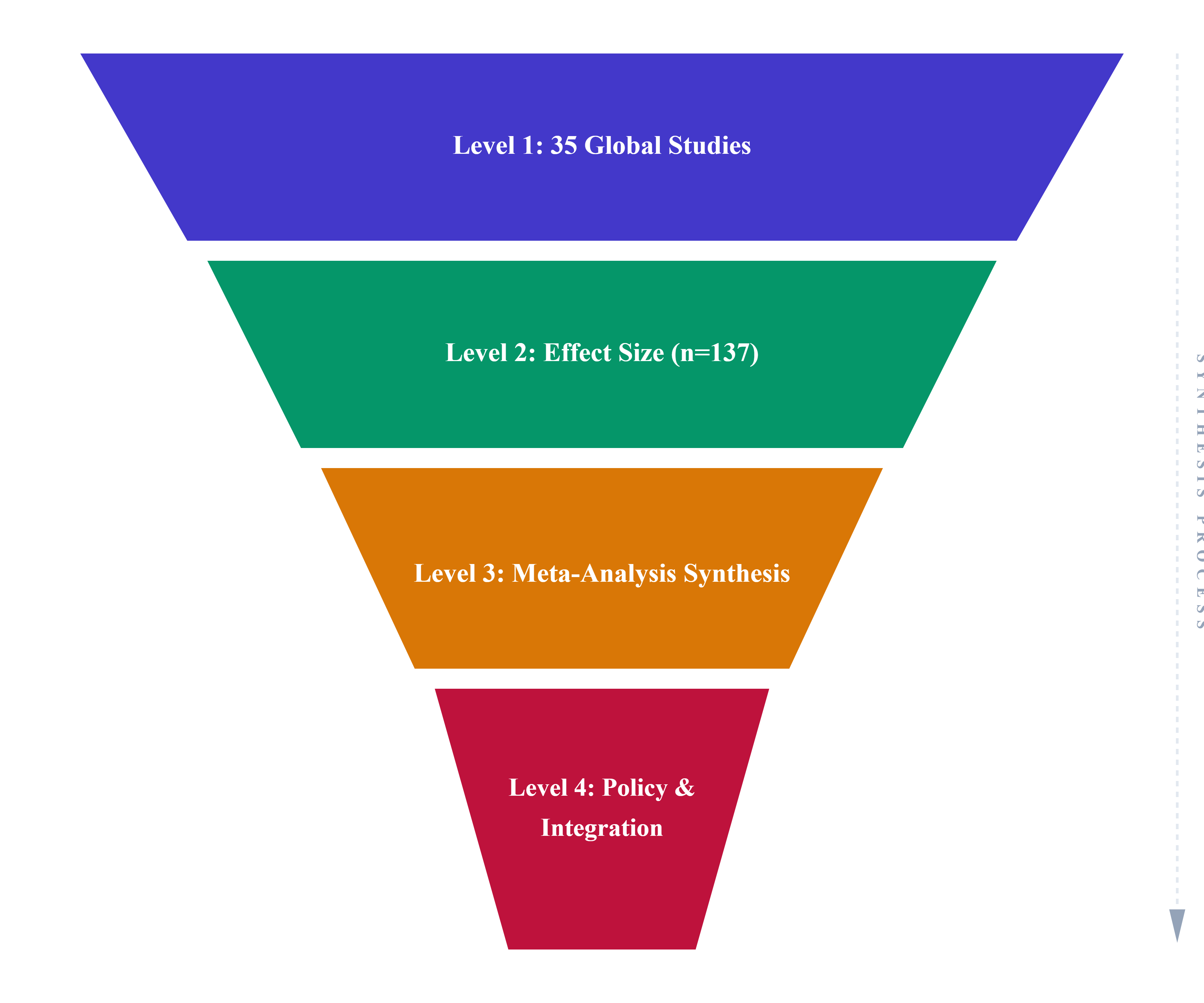
In today's era of digital transformation and the dominance of artificial intelligence, cognitive and social-emotional skills, such as social-emotional learning (SEL) and early moderation, have become vital competencies for students from an early stage of education. Adaptive instructional systems (Adaptive AI)-based instruction integrated with automated formative assessment is seen as an effective and creative strategy to enhance these skills through in-depth personalized learning. Over the past two decades, research on immersive technology has increased rapidly, but evaluation of its impact on character development and moderation attitudes in early childhood remains very limited. This study evaluates the impact of Adaptive AI-driven instruction on students' SEL skills and moderation behaviors, and systematically investigates the key factors contributing to their cognitive and affective development. The primary objective of this study is to map the effectiveness of AI-based formative assessment in monitoring the development of digital tolerance and resilience values from an early age through integrative quantitative evidence. The method used was a Systematic Literature Review (SLR) and meta-analysis of 137 empirical studies indexed in the Scopus database from 2000 to 2026. Data analysis was conducted using the Google Colab platform using the R programming language (metafor package) to calculate effect sizes and ensure data transparency. Key findings indicate that adaptive instructional systems have a significant positive impact on children's emotional maturity and inclusive attitudes. Variables such as scaffolding features in AI interactions and multimodal communication strategies were shown to significantly influence outcomes, while geographic location factors had no significant impact. In conclusion, the ethical integration of AI has profound implications for the development of early childhood education curricula based on digital resilience and moderation.
Downloads
##plugins.themes.bootstrap3.article.details##
Copyright (c) 2026 Nurratri Kurnia Sari, Muhlis Fajar Wicaksana, Md. Anisur Rahman

This work is licensed under a Creative Commons Attribution-ShareAlike 4.0 International License.
References
Alhazzaa, H. A., Aljarboa, F. I., Albelaihed, J. A., Alqahtani, J. A., Alhazzani, R. S., Aljameel, S. S., & Alqahtani, D. A. (2025). Exploring AI Applications for Optimal Business Location Selection in Smart Cities: A Literature Review. 2025 2nd International Conference on Advanced Innovations in Smart Cities, ICAISC 2025. https://doi.org/10.1109/ICAISC64594.2025.10959685
Almatar, K. M. (2024). Implementing AI-Driven Traffic Signal Systems for Enhanced Traffic Management in Dammam. International Journal of Sustainable Development and Planning, 19(2), 781–790. https://doi.org/10.18280/ijsdp.190236
Almufareh, M. F., Tehsin, S., Humayun, M., & Kausar, S. (2023). Intellectual Disability and Technology: An Artificial Intelligence Perspective and Framework. Journal of Disability Research, 2(4), 58–70. https://doi.org/10.57197/JDR-2023-0055
Alotaibi, N. S. (2024). The Impact of AI and LMS Integration on the Future of Higher Education: Opportunities, Challenges, and Strategies for Transformation. Sustainability (Switzerland), 16(23). https://doi.org/10.3390/su162310357
Alshehri, A. (2025). AI’s effectiveness in language testing and feedback provision. Social Sciences and Humanities Open, 12. https://doi.org/10.1016/j.ssaho.2025.101892
Alubthane, F. O. (2024). Role of AI-Powered Online Learning in Improving University Students’ Knowledge-Based Economic Skills. Pakistan Journal of Life and Social Sciences, 22(2), 2186–2202. https://doi.org/10.57239/PJLSS-2024-22.2.00157
Amini, H., Monegaglia, F., Shakeri, R., Tubino, M., & Zolezzi, G. (2024). Meanders on the Move: Can AI-Based Solutions Predict Where They Will Be Located? Water (Switzerland), 16(17). https://doi.org/10.3390/w16172460
Balart, T., & Shryock, K. J. (2024). A Framework for Integrating AI into Engineering Education, Empowering Human-Centered Approach for Industry 5.0. IEEE Global Engineering Education Conference, EDUCON. https://doi.org/10.1109/EDUCON60312.2024.10578796
Bhatt, C., Singh, S., Chauhan, R., Singh, T., & Uniyal, A. (2023). Artificial Intelligence in Current Education: Roles, Applications & Challenges. Proceedings - 2023 3rd International Conference on Pervasive Computing and Social Networking, ICPCSN 2023, 241–244. https://doi.org/10.1109/ICPCSN58827.2023.00045
Chandrasekara, S., Hewavitharana, D., Weerasinghe, M., Gayasri, B., Wijendra, D., & De Silva, D. (2025). Gamifying Coding Education for Beginners: Empowering Learners with HTML, CSS and JavaScript. In T. Mahanama (Ed.), Proceedings - International Research Conference on Smart Computing and Systems Engineering, SCSE 2025. Institute of Electrical and Electronics Engineers Inc. https://doi.org/10.1109/SCSE65633.2025.11030977
Chennareddy, V., & Koppula, R. C. (2024). Enhancing AI Data Management: Combining Reservoir Sampling and Self-Adaptive Testing for Efficiency. In R. Chhikara, M. Khurana, S. Mahajan, & Y. Gigras (Eds.), 2024 International Conference on Intelligent Systems for Cybersecurity, ISCS 2024. Institute of Electrical and Electronics Engineers Inc. https://doi.org/10.1109/ISCS61804.2024.10581365
Colliot, T., Krichen, O., Girard, N., Anquetil, É., & Jamet, É. (2024). What makes tablet-based learning effective? A study of the role of real-time adaptive feedback. British Journal of Educational Technology, 55(5), 2278–2295. https://doi.org/10.1111/bjet.13439
Dai, C.-P., Ke, F., Pan, Y., Moon, J., & Liu, Z. (2024). Effects of Artificial Intelligence-Powered Virtual Agents on Learning Outcomes in Computer-Based Simulations: A Meta-Analysis. Educational Psychology Review, 36(1). https://doi.org/10.1007/s10648-024-09855-4
Eager, B., & Brunton, R. (2023). Prompting Higher Education Towards AI-Augmented Teaching and Learning Practice. Journal of University Teaching and Learning Practice, 20(5). https://doi.org/10.53761/1.20.5.02
Eltahir, M. E., & Babiker, F. M. E. (2024). The Influence of Artificial Intelligence Tools on Student Performance in e-Learning Environments: Case Study. Electronic Journal of E-Learning, 22(9), 91–110. https://doi.org/10.34190/ejel.22.9.3639
García, B. A., & García, C. A. (2025). Artificial Intelligence as a Tool in Project Management Education. IEEE Global Engineering Education Conference, EDUCON. https://doi.org/10.1109/EDUCON62633.2025.11016536
Gligorea, I., Cioca, M., Oancea, R., Gorski, A.-T., Gorski, H., & Tudorache, P. (2023). Adaptive Learning Using Artificial Intelligence in e-Learning: A Literature Review. Education Sciences, 13(12). https://doi.org/10.3390/educsci13121216
Grelka, F., Kruse-Kurbach, T., & Berges, M. (2025). A Framework for Evaluating AI Powered Learning Platforms in K-12 and University CS Education. IEEE Global Engineering Education Conference, EDUCON. https://doi.org/10.1109/EDUCON62633.2025.11016415
Hauptman, A. I., Mallick, R., Flathmann, C., & McNeese, N. J. (2025). Human factors considerations for the context-aware design of adaptive autonomous teammates. Ergonomics, 68(4), 571–587. https://doi.org/10.1080/00140139.2024.2380341
Hu, Z. (2025). Strengthening Chinese Medicine Health Management Education through Artificial Intelligence: A South African Case Study. Educational Process: International Journal, 17. https://doi.org/10.22521/edupij.2025.17.344
Ifenthaler, D., Majumdar, R., Gorissen, P., Judge, M., Mishra, S., Raffaghelli, J., & Shimada, A. (2024). Artificial Intelligence in Education: Implications for Policymakers, Researchers, and Practitioners. Technology, Knowledge and Learning, 29(4), 1693–1710. https://doi.org/10.1007/s10758-024-09747-0
Järvelä, S., Nguyen, A., & Hadwin, A. (2023). Human and artificial intelligence collaboration for socially shared regulation in learning. British Journal of Educational Technology, 54(5), 1057–1076. https://doi.org/10.1111/bjet.13325
Khan, Z. U., Khan, D., Murtaza, N., Pasha, G. A., Alotaibi, S., Rezzoug, A., Benzougagh, B., & Khedher, K. M. (2024). Advanced Prediction Models for Scouring Around Bridge Abutments: A Comparative Study of Empirical and AI Techniques. Water (Switzerland), 16(21). https://doi.org/10.3390/w16213082
Kyambade, M., Namatovu, A., & Male Ssentumbwe, A. (2025). Exploring the evolution of artificial intelligence in education: from AI-guided learning to learner-personalized paradigms. Cogent Education, 12(1). https://doi.org/10.1080/2331186X.2025.2505297
Lee, S.-E. (2023). Otherwise than teaching by artificial intelligence. Journal of Philosophy of Education, 57(2), 553–570. https://doi.org/10.1093/jopedu/qhad019
López-Catalán, B., Bañuls, V. A., Hernantes Apezetxea, J., & Labaka, L. (2025). Artificial Intelligence for Extracting Key City Resilience Indicators: An Application to the Smart Mature Resilience Framework. Journal of the American Planning Association, 91(4), 537–554. https://doi.org/10.1080/01944363.2025.2501560
Makhoul, N., Achillopoulou, D. V, Stamataki, N. K., & Kromanis, R. (2023). Adaptive Pathways Using Emerging Technologies: Applications for Critical Transportation Infrastructure. Sustainability (Switzerland), 15(23). https://doi.org/10.3390/su152316154
Mitre, X., & Zeneli, M. (2024). Using AI to Improve Accessibility and Inclusivity in Higher Education for Students with Disabilities. 2024 21st International Conference on Information Technology Based Higher Education and Training, ITHET 2024. https://doi.org/10.1109/ITHET61869.2024.10837607
Prinsloo, P., Slade, S., & Khalil, M. (2023). Multimodal learning analytics—In-between student privacy and encroachment: A systematic review. British Journal of Educational Technology, 54(6), 1566–1586. https://doi.org/10.1111/bjet.13373
Ragul, B. S., Jacob, K. P., & Srividhya, S. (2025). AI-Powered Autonomous Token Analysis and Liquidity Provisioning System. Proceedings of 5th International Conference on Pervasive Computing and Social Networking, ICPCSN 2025, 906–912. https://doi.org/10.1109/ICPCSN65854.2025.11035841
Saber, E. (2024). Smart Education, Robot-Prof: Principles of Programming for Personalized Pedagogy. In A. B. Dahmane, A. B. Dahmane, E. H. A, & M. Essaaidi (Eds.), Proceedings of 2024 1st Edition of the Mediterranean Smart Cities Conference, MSCC 2024. Institute of Electrical and Electronics Engineers Inc. https://doi.org/10.1109/MSCC62288.2024.10697003
Salim, A. A., & Tang, S.-M. (2024). Occupational Safety in the Age of Artificial Intelligence: Reformation of the Indonesian Work Safety Law. Journal of Indonesian Legal Studies, 9(2), 985–1026. https://doi.org/10.15294/jils.v9i2.4621
Schinello, S. (2025). CHALLENGES AND OPPORTUNITIES IN THE USE OF ARTIFICIAL INTELLIGENCE IN CREATIVE ECONOMY: INSIGHTS FROM EXPERT INTERVIEWS. Economics and Sociology, 18(1), 199–216. https://doi.org/10.14254/2071-789X.2025/18-1/10
Schroth, O., & Maier, A. (2025). Integrating Generative Artificial Intelligence into the Landscape Architecture Design Process. Journal of Digital Landscape Architecture, 2025(10), 665–675. https://doi.org/10.14627/537754063
Shukla, P. K., Singh, A., Sharma, A., Malik, P. K., & Kathuria, S. (2023). Technological Powered Impersonation in MOOC Learning. Proceedings - 2023 3rd International Conference on Pervasive Computing and Social Networking, ICPCSN 2023, 523–527. https://doi.org/10.1109/ICPCSN58827.2023.00091
Tawara, A. A., El-Den, J., Gide, E., & Sebastian, Y. (2024). A Systematic Review and Comprehensive Analysis of AI-Enabled Re-Skilling and Upskilling in Education: Transformative Strategies for the Future. 2024 21st International Conference on Information Technology Based Higher Education and Training, ITHET 2024. https://doi.org/10.1109/ITHET61869.2024.10837638
Teckwani, S. H., Wong, A. H.-P., Luke, N. V, & Low, I. C. C. (2024). Accuracy and reliability of large language models in assessing learning outcomes achievement across cognitive domains. Advances in Physiology Education, 48(4), 904–914. https://doi.org/10.1152/ADVAN.00137.2024
Truong, U. T. (2024). Writing Classes in the AI Era: Redefining English Teachers’ Roles. Proceedings - 2024 6th International Workshop on Artificial Intelligence and Education, WAIE 2024, 50–55. https://doi.org/10.1109/WAIE63876.2024.00016
Verma, A., Gupta, V., Nihar, K., Jana, A., Jain, R. K., & Deb, C. (2023). Tropical climates and the interplay between IEQ and energy consumption in buildings: A review. Building and Environment, 242. https://doi.org/10.1016/j.buildenv.2023.110551
Vijaya, J., Swati, Ch., & Satya, S. (2024). Ikigai: Artificial Intelligence-Based Virtual Desktop Assistant. 2024 IEEE International Conference on Interdisciplinary Approaches in Technology and Management for Social Innovation, IATMSI 2024. https://doi.org/10.1109/IATMSI60426.2024.10502959
Watanabe, A. (2023). Exploring Totalitarian Elements of Artificial Intelligence in Higher Education With Hannah Arendt. International Journal of Technoethics, 14(1). https://doi.org/10.4018/IJT.329239
Wederni, K., Haddaji, B., Hamed, Y., Bouri, S., & Colombani, N. (2024). Controversial insights into irrigation water quality in arid and semi-arid regions using AI driven predictions: Case of southern Gabès. Groundwater for Sustainable Development, 27. https://doi.org/10.1016/j.gsd.2024.101381
Yanjin, S., Qian, L., Kun, Z., & Ruirui, Z. (2023). The Application of Artificial Intelligence Technology in Personalized Teaching of Vocational Education. Proceedings - 2023 13th International Conference on Information Technology in Medicine and Education, ITME 2023, 846–850. https://doi.org/10.1109/ITME60234.2023.00172
Zekaj, R. (2023). AI Language Models as Educational Allies: Enhancing Instructional Support in Higher Education. International Journal of Learning, Teaching and Educational Research, 22(8), 120–134. https://doi.org/10.26803/IJLTER.22.8.7