

Environmental Health Threats: Evaluating the Presence of Indoor Air Bacteria, Antibiotic-Resistant Bacteria, Disease Vectors, and Waste Management Systems
Vol. 5 No. 1 (2025)
The environment faces a variety of complex health threats, including the presence of bacteria in indoor air, antibiotic-resistant bacteria, disease vectors, and ineffective waste management systems. The presence of pathogenic microorganisms in indoor and outdoor environments can worsen environmental quality leading to public health. Disease vectors such as filariasis and antibiotic-resistant bacteria contribute to the complexity of the problem. In this publication, impact evaluation and management strategies are discussed to address environmental threats.
The articles in this issue were authorized/co-authorized by authors from Indonesia and America

Integration of Phytoremediation and Environmental Factors in Addressing Pollution and Infectious Diseases
Vol. 4 No. 3 (2024)
This issue presents an in-depth analysis of the interactions between phytoremediation, environmental factors, and their impact on health and agricultural productivity. With a focus on pollutant removal through plants such as Eichhornia crassipes and Pistia stratiotes, this article explains how phytoremediation can reduce BOD and phosphate levels in wastewater effluents. In addition, this issue explores the role of air pollution and e-waste in disrupting agricultural productivity in urban areas and the impact of environmental factors on the spread of infectious diseases. Through a multidisciplinary approach, this issue aims to provide a better insight into the environmental challenges facing modern society and the solutions that can be applied.
The articles in this issue were authorized/co-authorized by authors from Indonesia, Malaysia, India and Jordan,

Contaminants of Concern, Health Risk evaluation and Management of Air Pollutants, Wastewater, and Microplastics
Vol. 4 No. 2 (2024)
The environment faces increasing threats from a variety of pollutants, including airborne contaminants, wastewater discharge, and microplastic contamination. These pollutants present negative impacts on public health and ecological systems. This issue provides a comprehensive evaluation of the adverse impacts of these contaminants of concern. It explores their pathways and health consequences, the effectiveness of current management strategies, and proposes innovative solutions for mitigating environmental challenges.
The articles in this issue were authorized/co-authorized by authors from Indonesia and Malaysia

Pollution Impacts and Sustainable Solutions for Environmental Health Remediation
Vol. 4 No. 1 (2024)
This section presents analysis of different types of pollution and their impact on health and the environment, as well as some sustainable remediation efforts utilizing organisms to restore environmental health.
The articles in this issue were authorized/co-authorized by authors from Indonesia, Malaysia, Hungary, Jordan and India

Soil Health, Animal Health, and Water Quality in Agroecological Systems
Vol. 3 No. 3 (2023)
Examines the interconnectedness of soil quality, animal well-being, and water resources within sustainable agricultural ecosystems. Healthy soil enriched with organic matter and microbial diversity supports plant growth, which in turn nourishes animals and contributes to food security. Safe water quality is essential for both livestock and crop irrigation, as contaminated water can negatively impact animal health and compromise soil and plant integrity. This theme emphasizes integrated management practices that maintain soil fertility, promote animal welfare, and protect water resources, contributing to a resilient agroecological system.
The articles in this issue were authorized/co-authorized by authors from Indonesia and Sri Lanka
Environmental drivers of vector-borne: Impact and mitigation
Vol. 3 No. 2 (2023)
This issue focuses on how environmental factors can trigger vector-borne and discusses on how the transmission of vector-borne diseases is sensitive to environmental conditions.
The articles in this issue were authorized/co-authorized by authors from Indonesia.
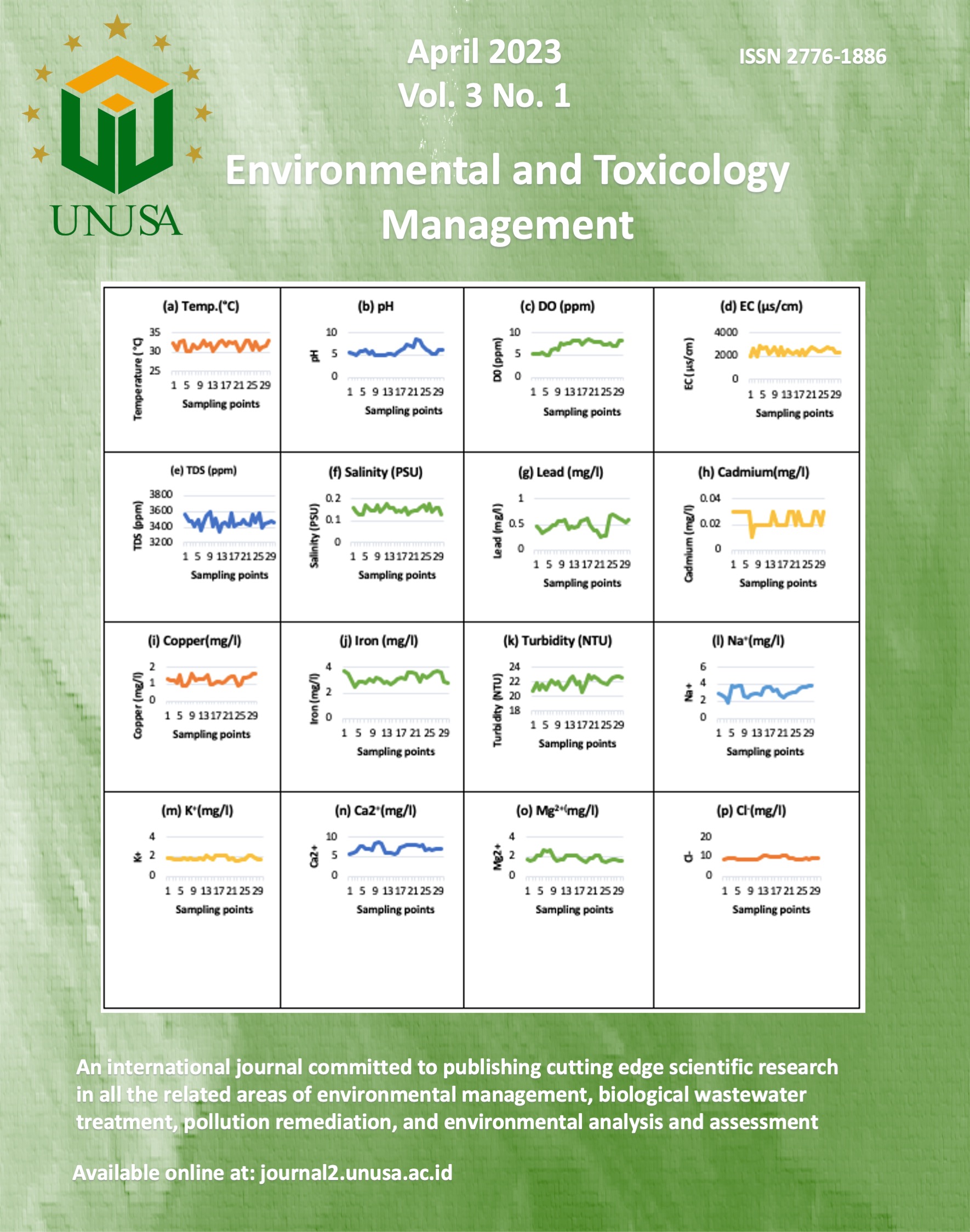
Environmental factors and their impacts
Vol. 3 No. 1 (2023)
This issue focuses on how environmental factors can have a major influence on human health. Communities can reduce exposure of pollutants that have a toxic effect by optimizing environmental health and how several environmental remediation technologies are applied for improving environmental health.
The articles in this issue were authorized/co-authorized by authors from Indonesia, Malaysia and Nigeria
Environmental assessment and its benefits
Vol. 2 No. 3 (2022)
Environmental assessment becomes very substantial to inform governments, non-governmental organizations, and the general public about environmental issues and provides knowledge and options for action to achieve sustainable development goals. This issue focuses on how several concepts and management to take actions for environmental assessment and to analyze its benefits.
The articles in this issue were authorized/co-authorized by authors from Indonesia, Malaysia, Brunei Darussalam, America, Japan, Malawi, Iraq, Brazil and Thailand.
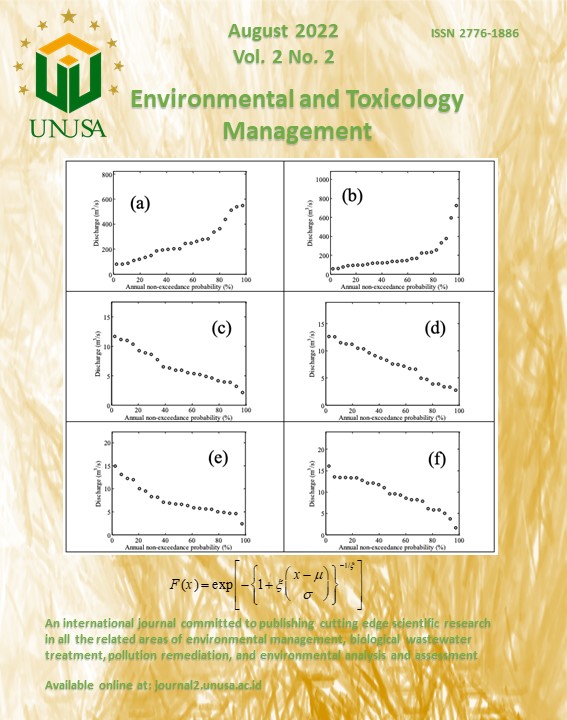
Environmental flows and natural resources management
Vol. 2 No. 2 (2022)
Managing natural resources such as water have been important to make sure they are available for long term and the next generations. Without a proper concept of management, it is hard to maintain their availability and they are free from contaminants. This issue focuses on how several concepts and management for maintaining water available and relatively free from contaminants.
The articles in this issue were authorized/co-authorized by authors from Malaysia, United Kingdom, Indonesia, Hungary, Jordan, Germany and Australia.
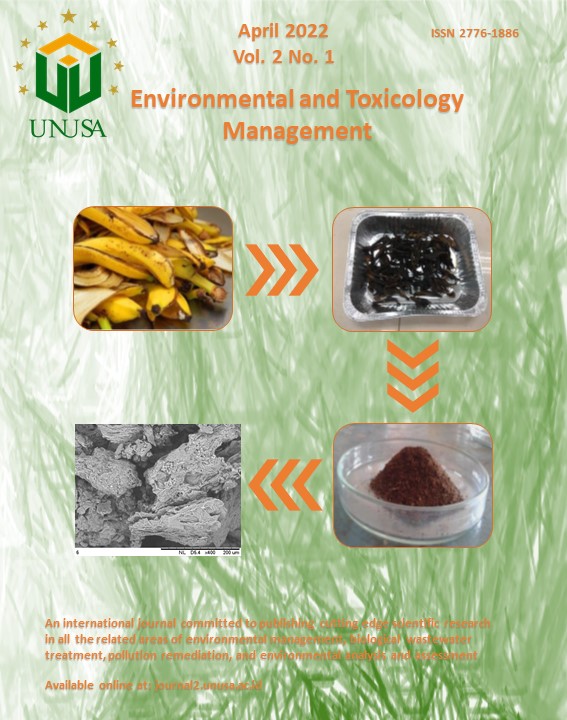
Waste management and environmental remediation
Vol. 2 No. 1 (2022)
Waste management and environmental remediation have massive consequences for the environment and are importance because they have influence on the human health and ecosystems. This issue focuses on how several concepts for waste management and environmental remediation are applied for improving environmental health.
The articles in this issue were authorized/co-authorized by authors from USA, Malaysia, Trinidad and Tobago, Hungary, China and Indonesia.
Green engineering principles and application
Vol. 1 No. 3 (2021)
Green engineering is an approach to design and use of processes and products and has the objective to reduce pollution, promotes sustainability, and minimizes risk to human health and the environment. This concept has been widely used for many applications and the use of this concept is critical for future sustainability.
The articles in this issue were authorized/co-authorized by authors from Malaysia and Indonesia.
Green chemistry for environmental problem solutions
Vol. 1 No. 2 (2021)
There is a need for managing the environment and green chemistry becomes the promising approach to achieve this aim. Green chemistry refers to the design and synthesis of environmentally benign chemical processes, which include the development of biomaterials and synthesis of bioproducts from natural resources. This concept focuses on the reduction of the use and fabrication of hazardous chemicals.
The articles in this issue were authorized/co-authorized by authors from Malaysia, Indonesia and Bangladesh.
Developing and implementing green technologies for environmental management
Vol. 1 No. 1 (2021)
Currently, green technologies have been introduced and adopted for environmental management since the conventional technologies such as physical and chemical have been associated with the negative effects to the environment. This is the first issue of Environmental and Toxicology Management and covers several aspects of environmental sustainability management, which include the exploration of ways to use resources and processes more responsibly and the description of several tools used for overcoming current challenges and ensuring long-lasting future success.
The articles in this issue were authorized/co-authorized by authors from Malaysia.